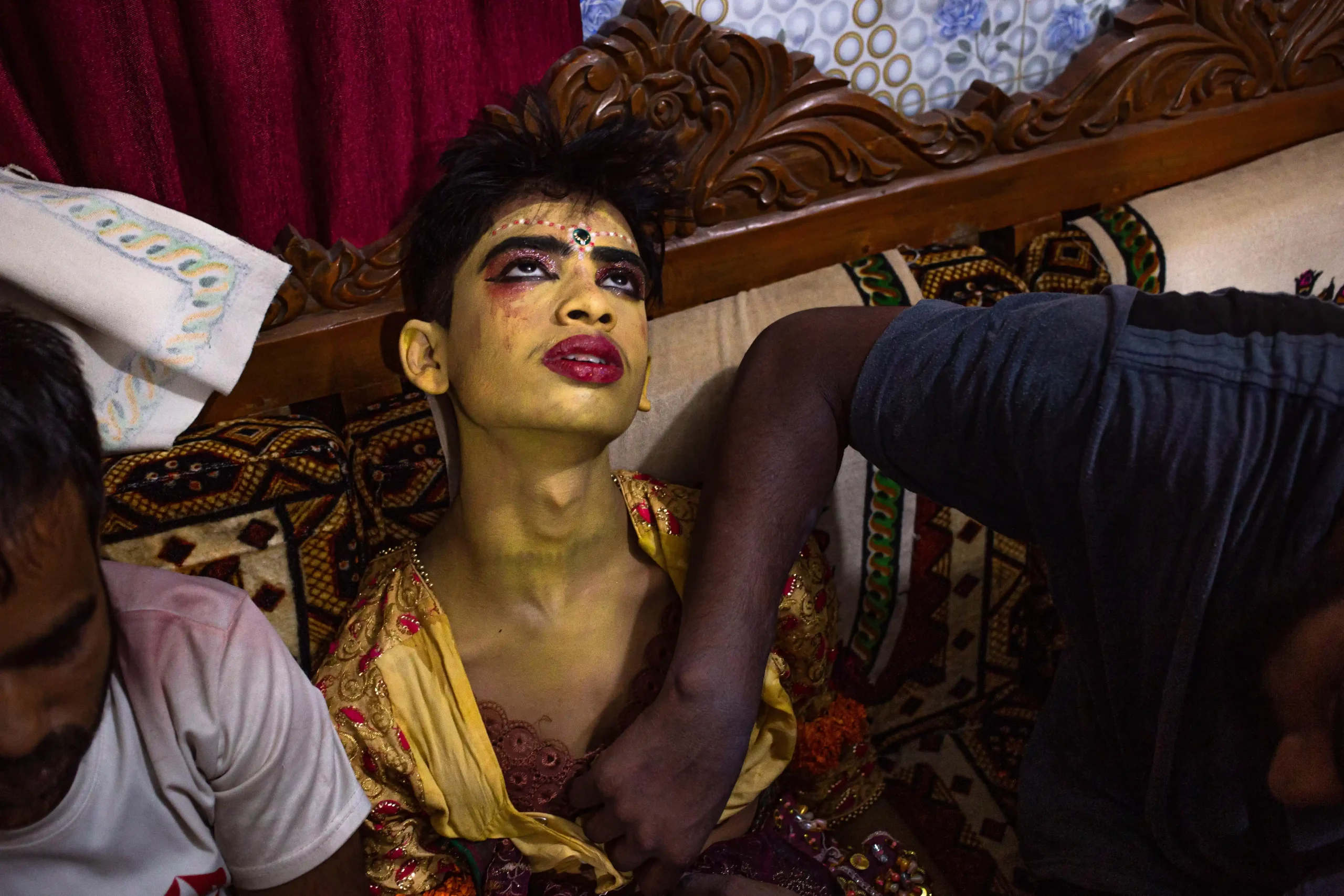
Ghatu, an extinct Bangladeshi traditional cultural folk song, lost its appeal for sexual absurdity and deviation but is still inhaled as a form of abuse at various ‘jatra’ (Traditional folk-theatre festival form) programs nowadays. People in the northeastern part of Bangladesh still enjoy the Ghatu songs, where everyone’s concentration and lust revolve around a teenage boy who grows their hair with the intent of resembling a girl, wears a saree or lehenga, takes cheap accessories and makeup, and wears coconut shells inside their blouses to attract the audience. Drunk lower-class men treat these boys, who come from vulnerable and impoverished families, as their “pleasure toys.”
Once they started dancing, people began to lust after them. While performing on stage, they even sometimes get taunted and abused sexually. Most men sought after these young boys for their sexual desire. When some of them spread money during the procession, they could dance with them in a different room and fulfill their absurd lust with these poor boys.
At times, the poor boy’s moistened eyes reflect their helplessness and financial insecurities. This sexual absurdity contributed to the decline of this form of music.